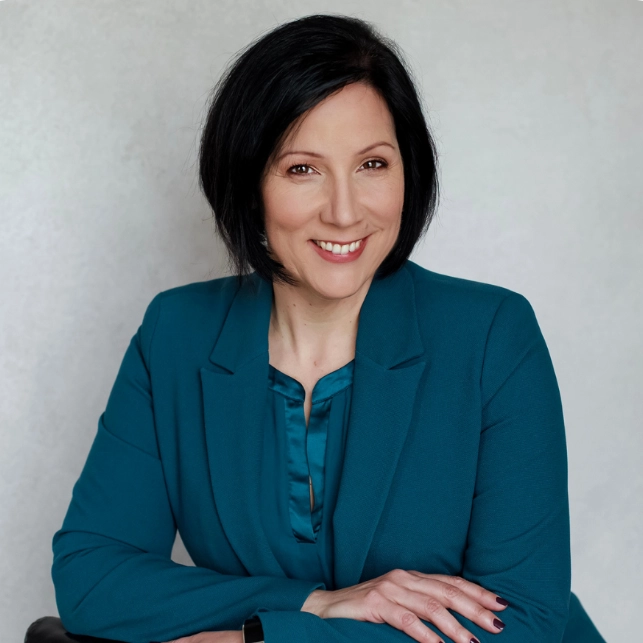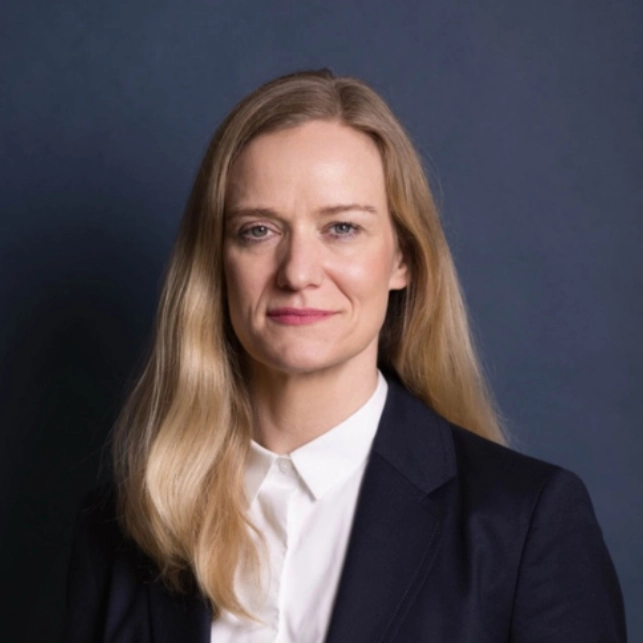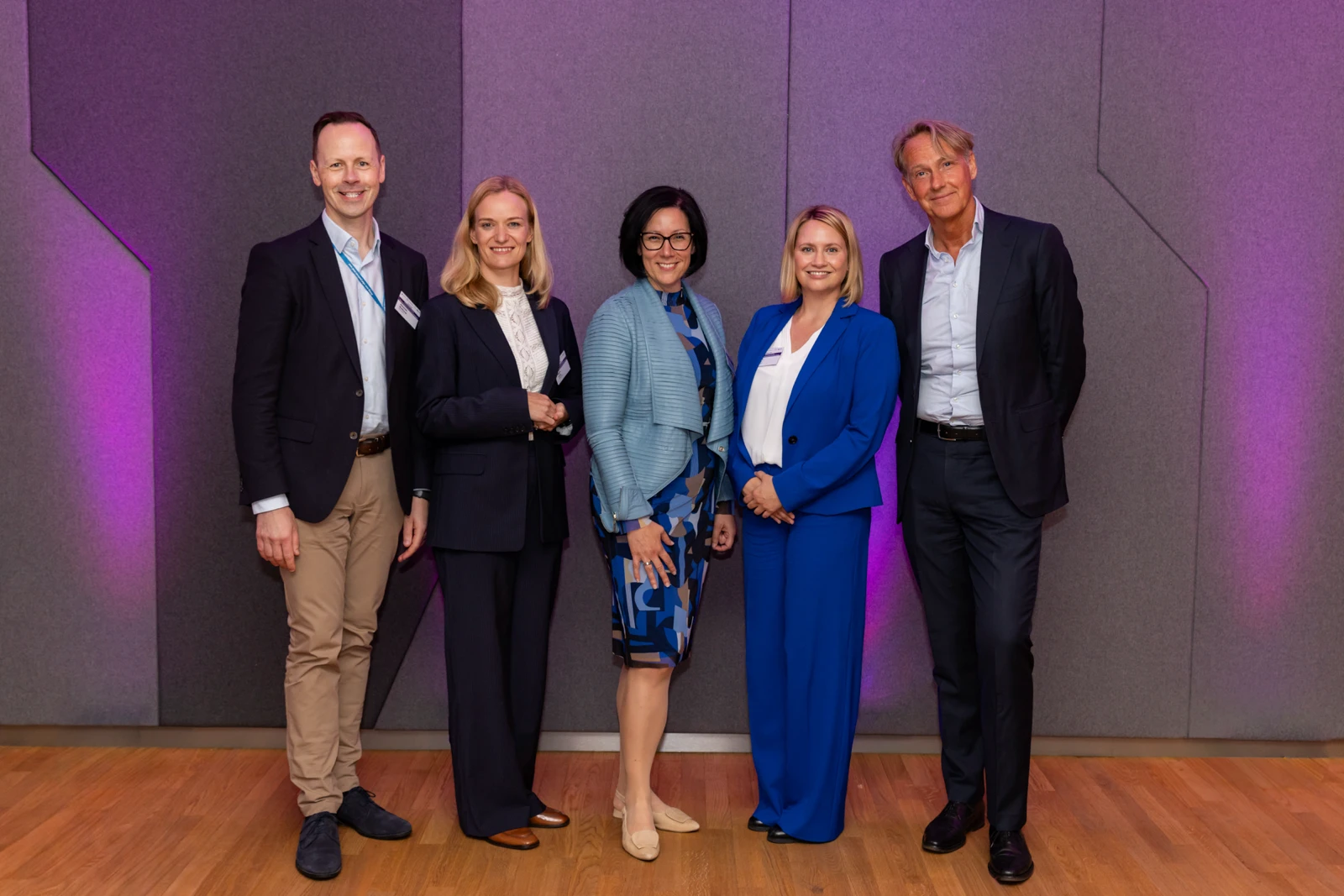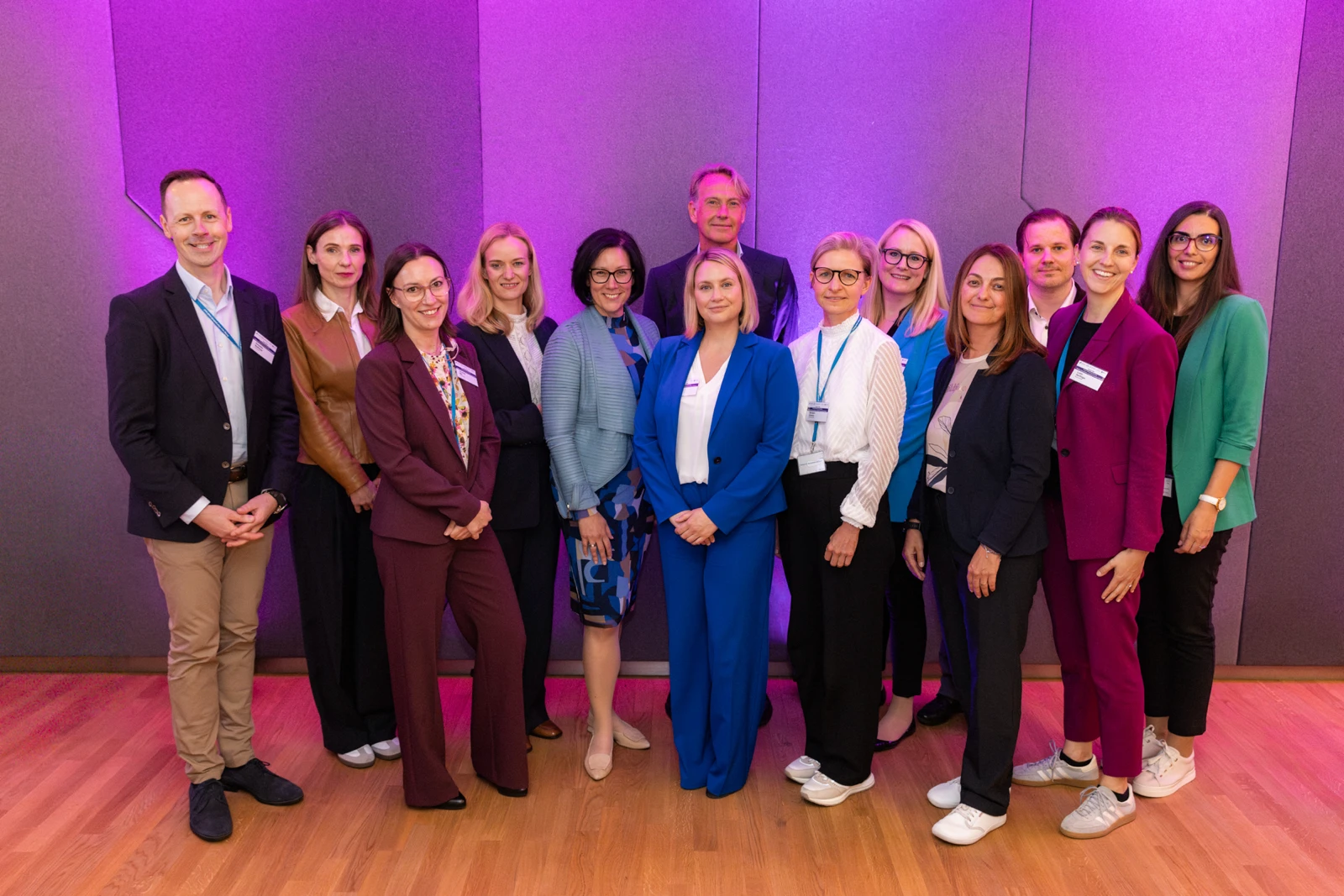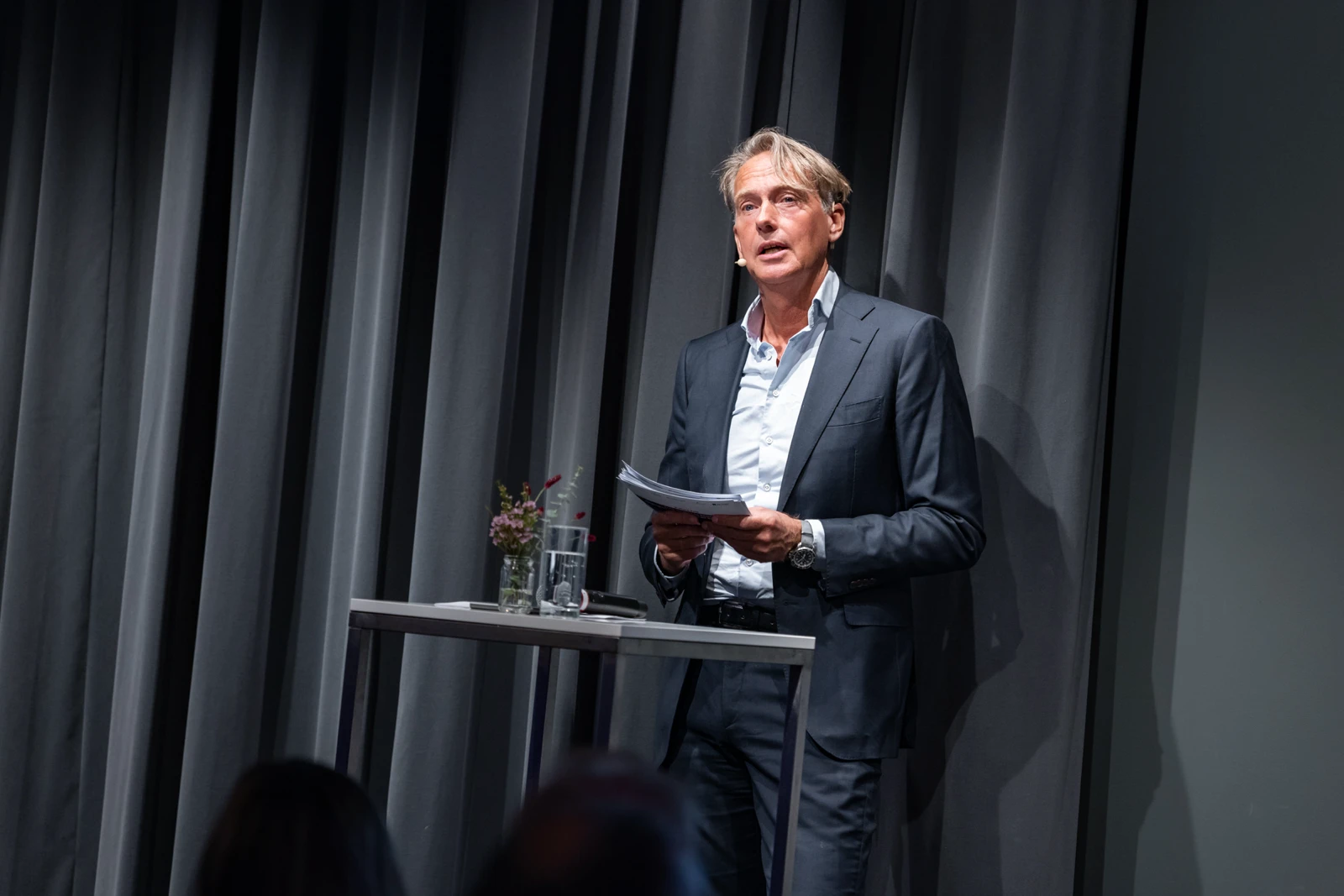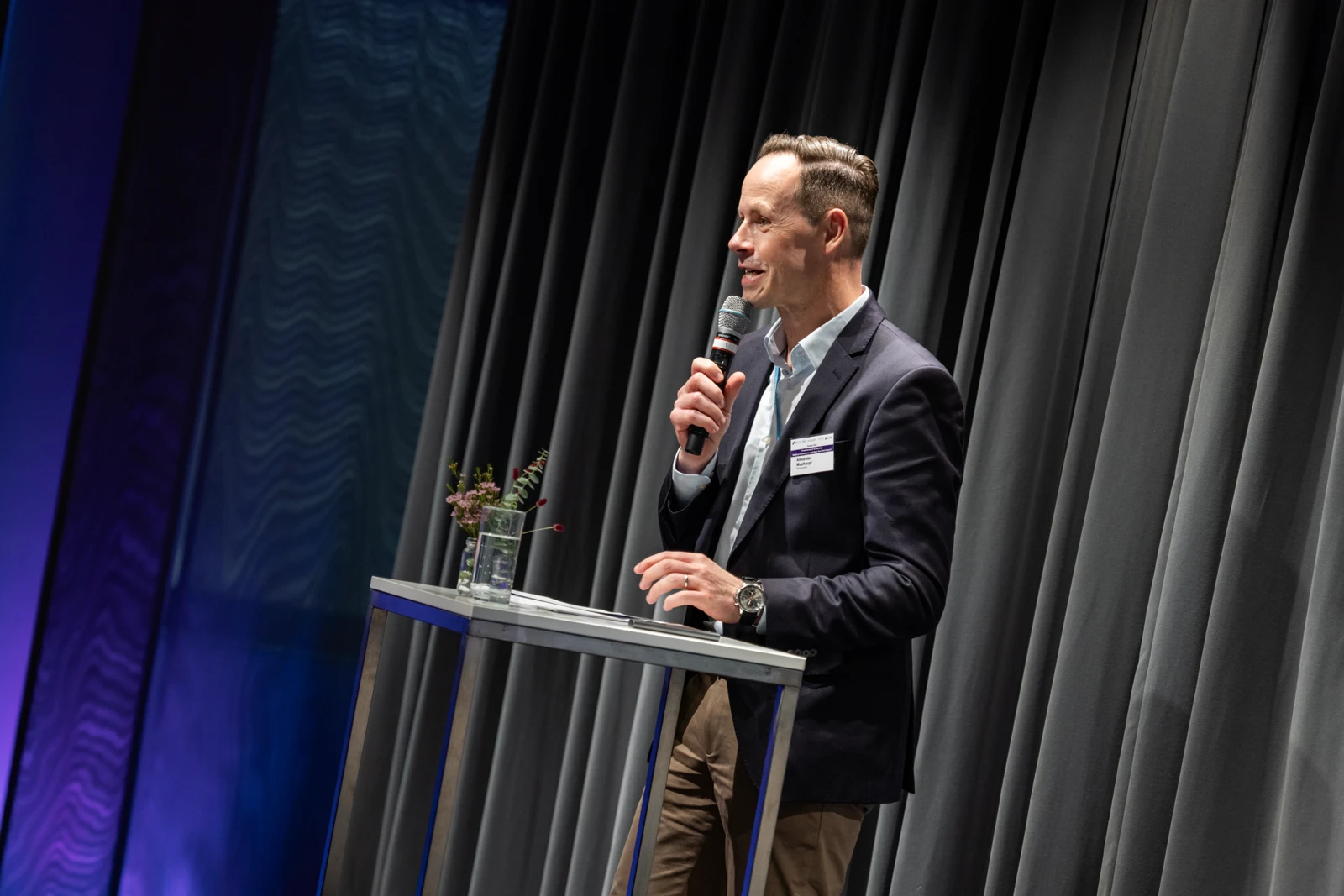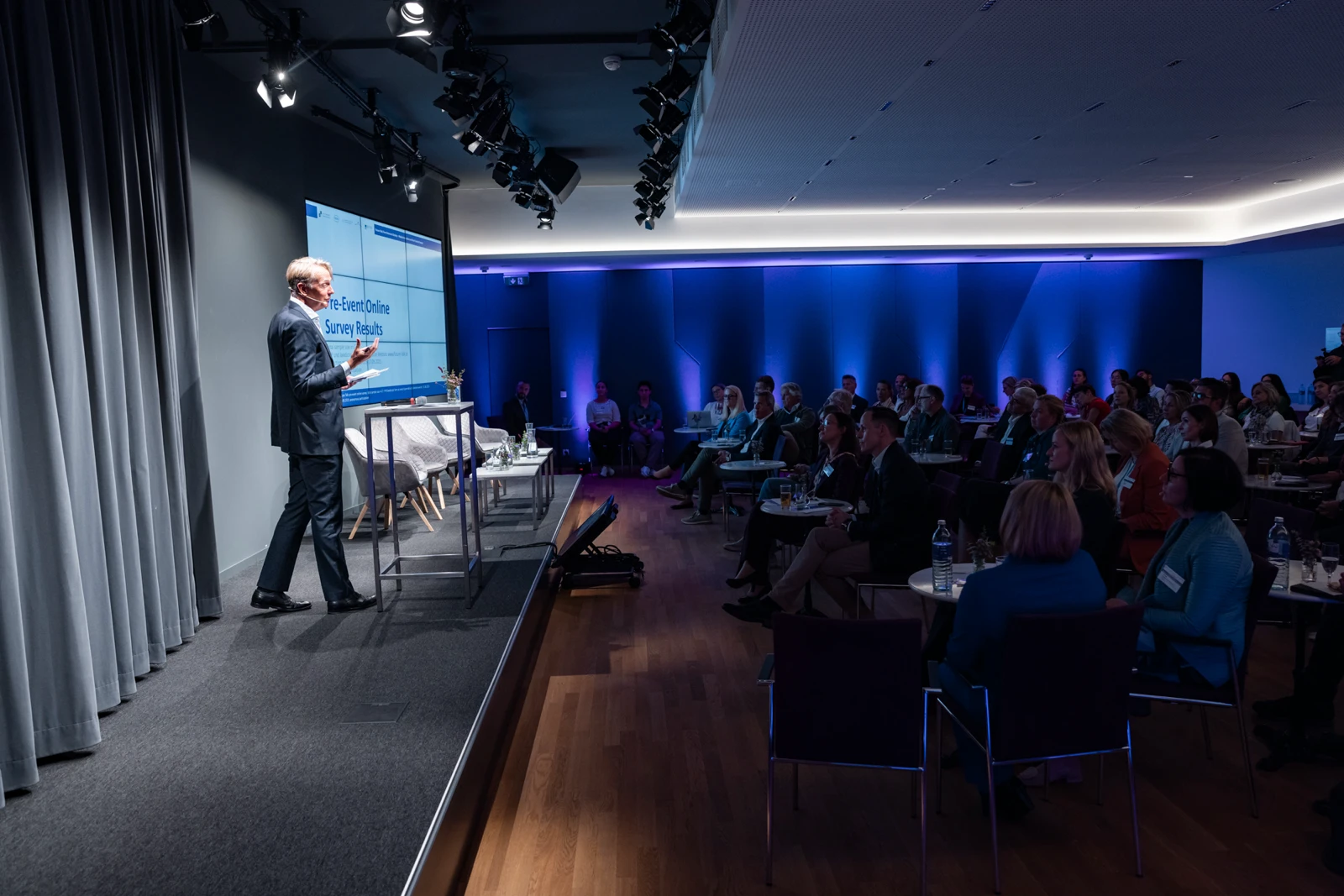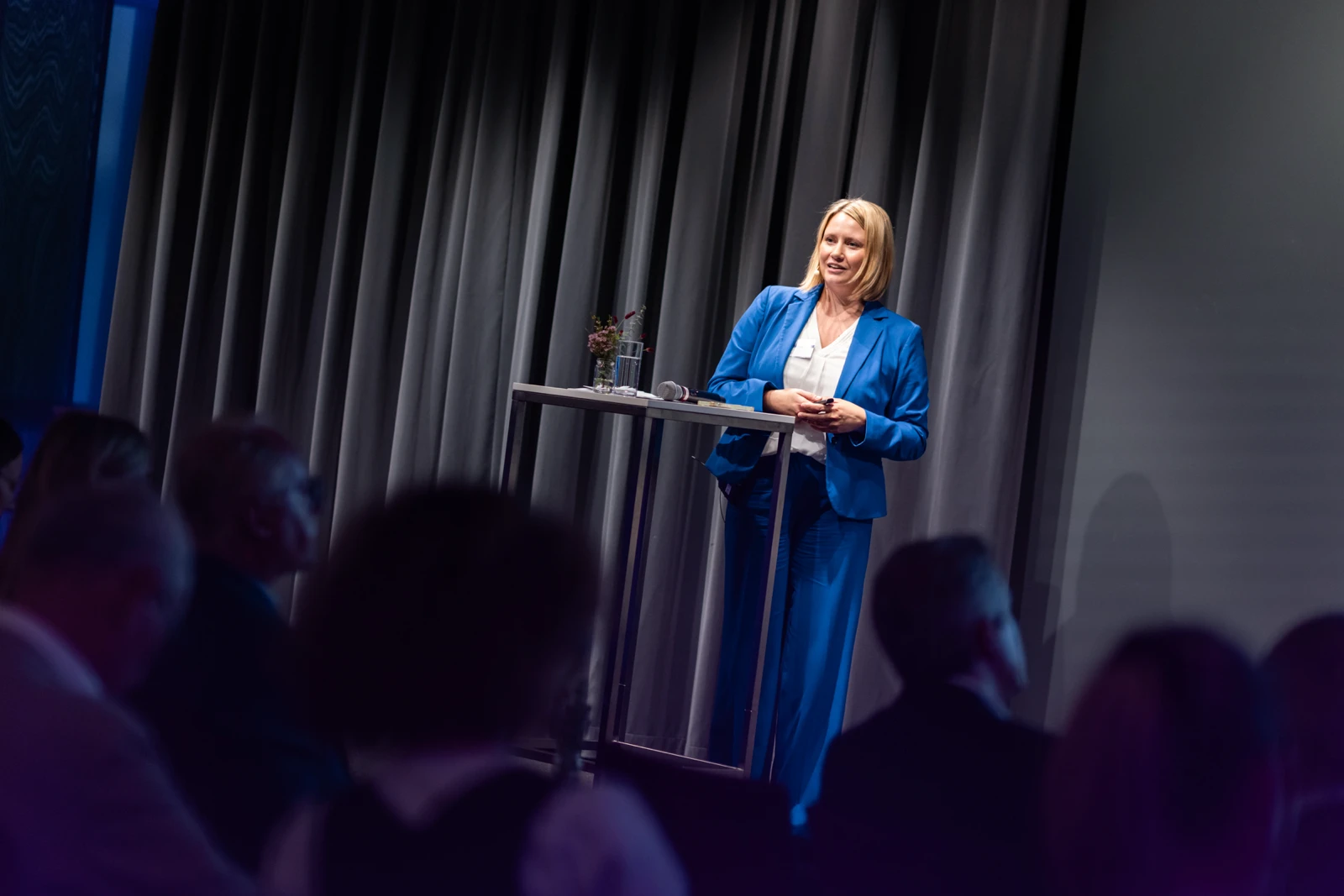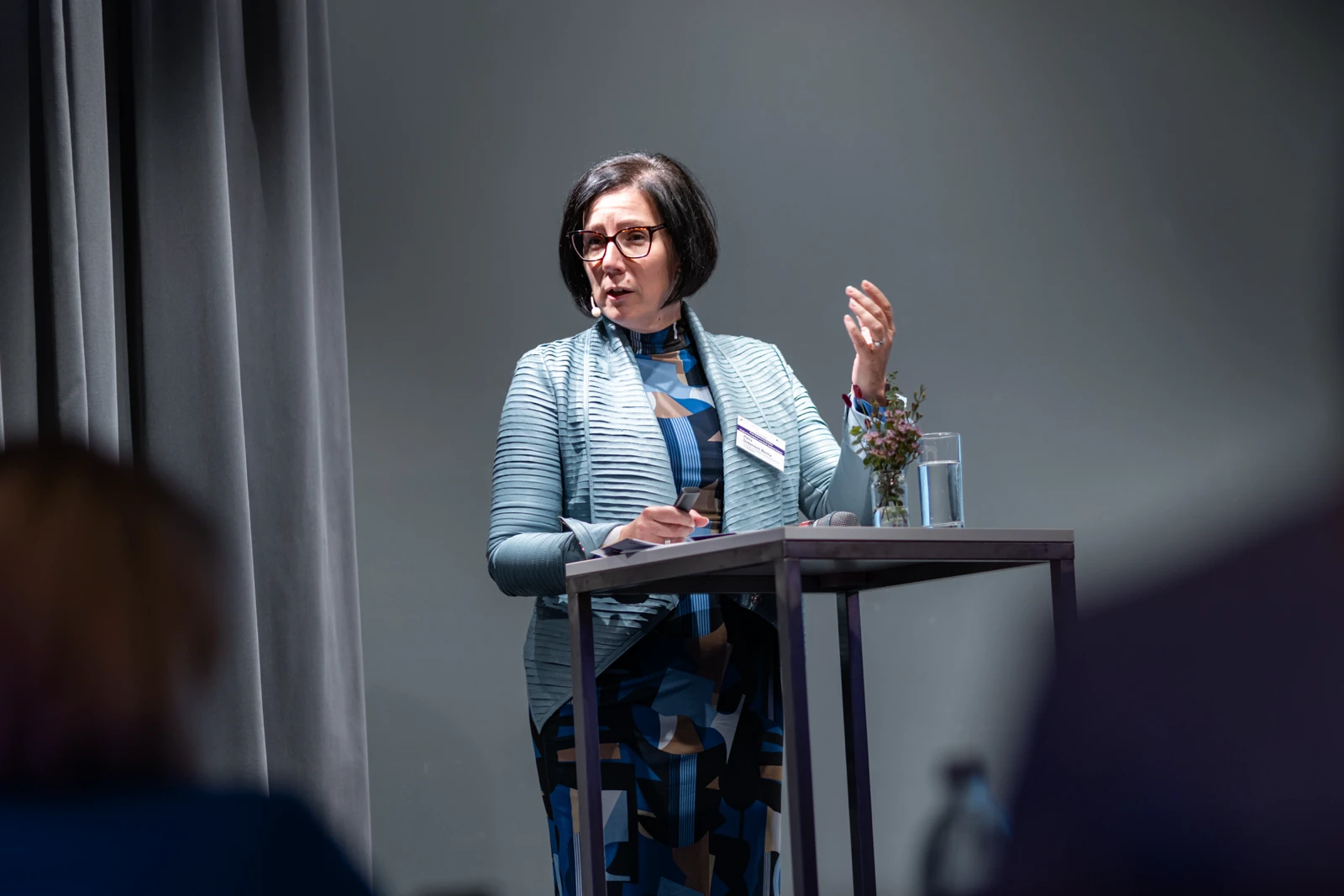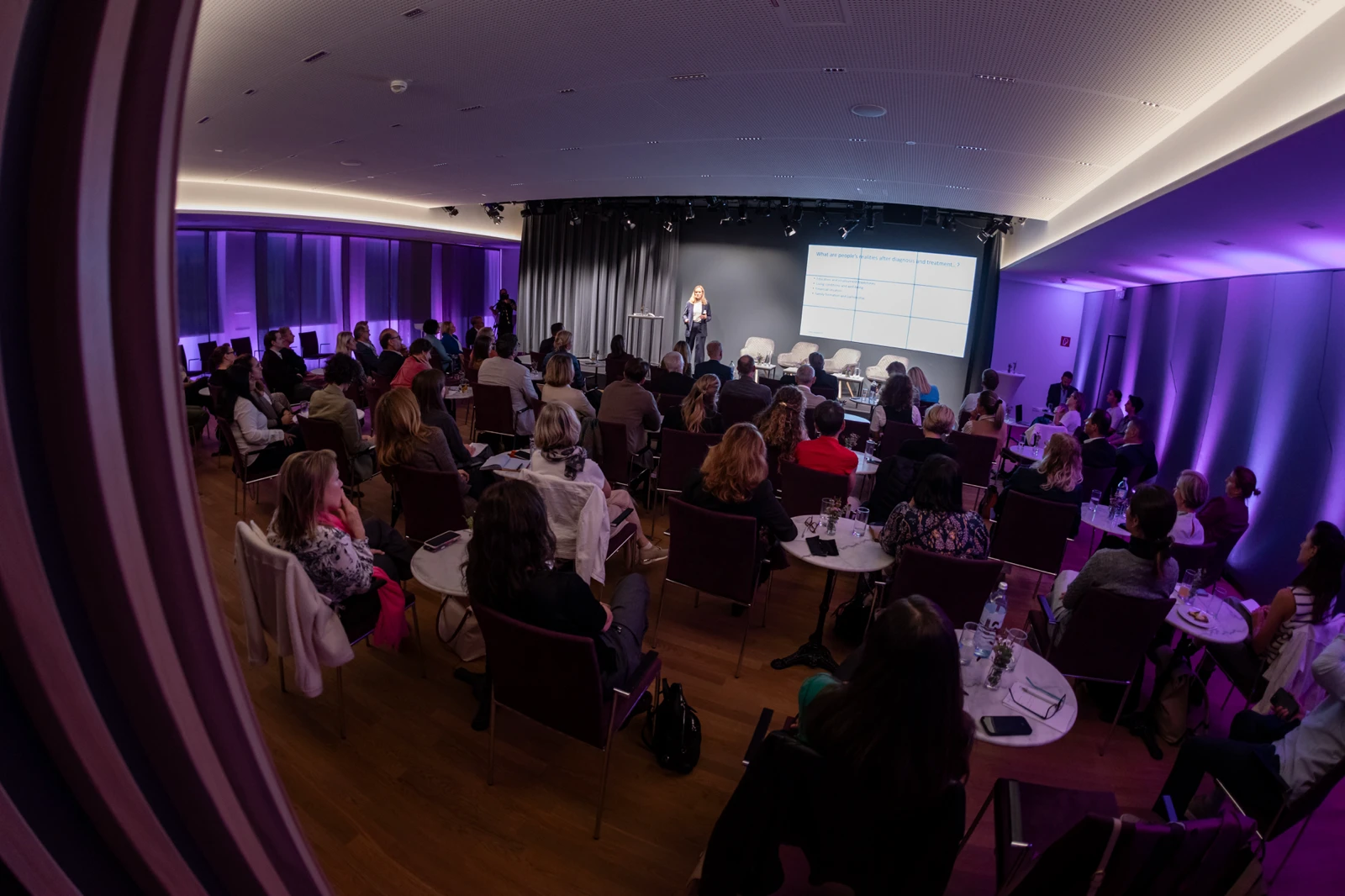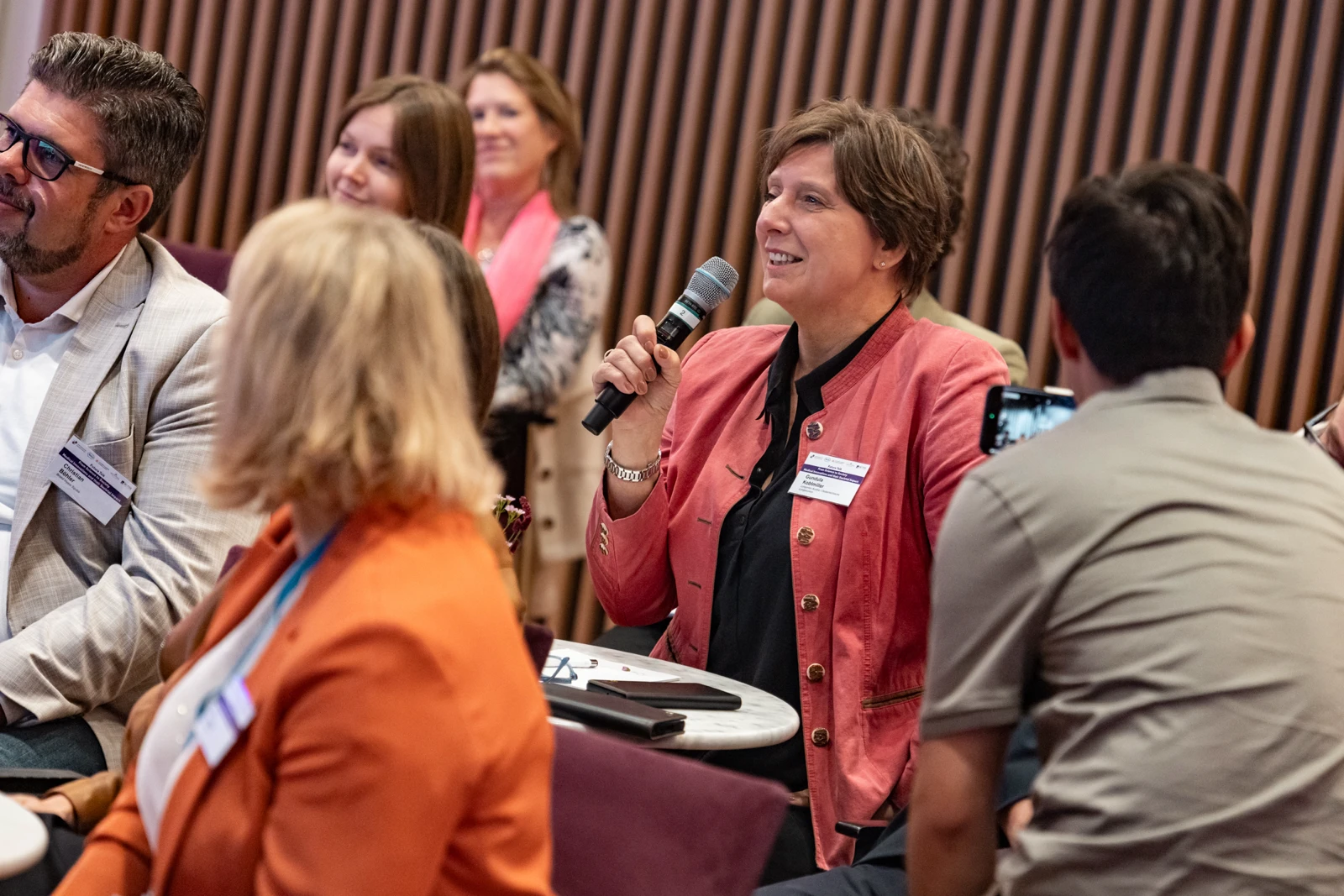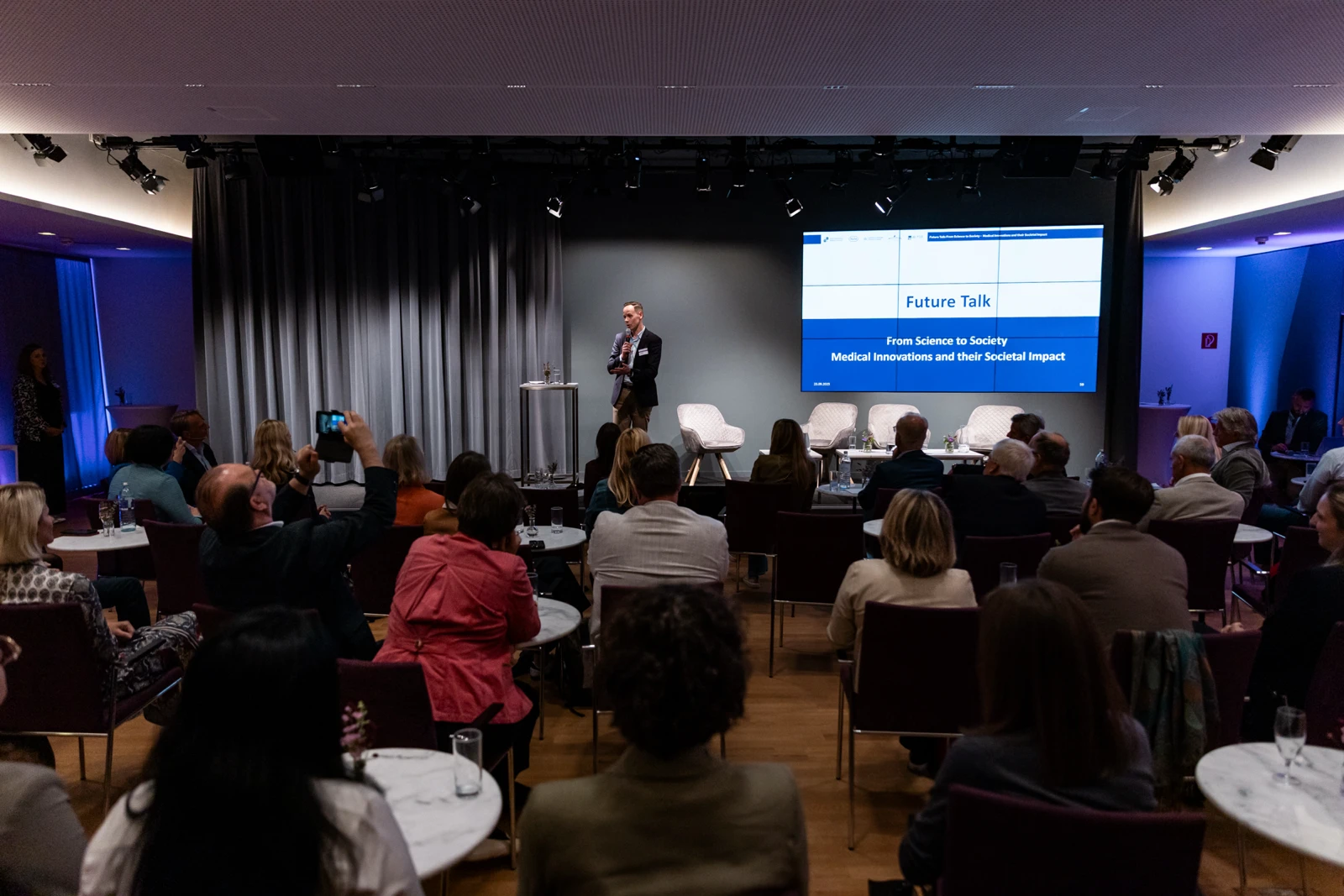


Medical innovations don’t just improve lives – they have a lasting impact on society. At the Future Talk in Vienna, leading experts addressed these effects and made the case for why they can’t be ignored. In his welcome, Alexander Muelhaupt, General Manager of Roche Austria, set the tone by stressing the importance of a long-term perspective: “The question is: how can we ensure that we benefit from the effects of medical innovations in the long term and in a sustainable manner?”
Health Innovations as the Foundation of Prosperity
Picking up on this theme, Malina Müller, Head of Health Economics at WifOR Institute, outlined a concrete way forward: She underlined that healthcare must be seen not as a budgetary burden, but as a driver of growth, innovation, wealth and prosperity. To make this shift tangible, she argued, we need better measurement of the hidden socioeconomic costs of disease – from lost productivity to unpaid care work. As an example, she pointed to the socioeconomic burden of multiple sclerosis in Austria: in a single year, the disease generated costs of 602 million dollars, of which 481 million were linked to losses in paid work and 121 million to unpaid work. This, Müller explained, is roughly equivalent to financing universal healthcare for 76,000 Austrians for an entire year. “Health is the foundation of everything. It is not only valuable for individuals. It is also key to boosting employment, productivity, and ultimately GDP. Yet health investments are often undervalued because the broader socioeconomic burden, such as lost productivity and unpaid work, is not included in traditional measures.”
Societal Impacts Matter
Assoc. Prof. Petra Došenović Bonča of the University of Ljubljana’s School of Economics and Business highlighted why medical innovation must also be assessed through a societal lens. Innovations create within health system, cross-sector, environmental and intergenerational externalities. Ignoring these effect that emerge outside a specific care episode can create distributional effects in the form of either cost shifting or increased health inequalities.
“If we do not address the societal dimension of diseases and medical innovations, we are not managing the burden of diseases, we are merely shifting it to other stakeholders. Only by adopting a broader view we can capture the full value of innovation, increase health system resilience, and strengthen the social licence that is key for maintaining public trust in the healthcare system.” She also explained why this remains so difficult: time lags in decision-making, the need for consistency in assessment methods and decision criteria to enable comparability across health technologies, limited research-readiness of data, and unresolved research gaps and methodological issues all make evaluations of technologies from a societal perspective a challenge.
Leveraging Data for Better Decisions
From a statistical perspective, Regina Fuchs, Director of Population Statistics at Statistics Austria and Head of the Austrian Micro Data Center, stressed the importance of making better use of the data we already have. She argued that rather than constantly collecting new data, the focus should be on accessibility, usability, and transparency to enable evidence-based decision-making. “We do not necessarily need more data. What we need is to make existing data available – for researchers, for policymakers, and for the public sector – so we can make truly evidence-based decisions and target policies.”
Breaking Silos and Building Trust
This call for openness and clarity flowed naturally into the closing panel discussion, moderated by Public Health Expert, Prof. Nick Guldemond (Leiden University Medical Center, Tsinghua University, Medical University of Gdansk, Carol Davila University of Medicine and Pharmacy, Bucharest). The debate centered on how trust can be strengthened, how short-sighted focus and information silos can be dismantled, and how common standards for using health data for research purposes and decision-making can be established.
Regina Fuchs pointed to communication as a decisive factor in winning trust: “We need to boil it down to very simple messages. We must communicate clearly what the data will be used for, and what innovations really mean for patients.”
Malina Müller emphasized the need for joint solutions: “There are barriers for researchers, with a broad range of methods being applied. That is why the priorities are access to data, consensus, and collaboration. She further pointed out: "When you account for productivity, unpaid work, and long-term economic impact - health isn’t just a cost. It’s a generator of value.“
Petra Došenović Bonča called for a broader inclusion of stakeholders, urging that the circle be expanded: “When it comes to health, the conversation cannot stop with the Minister of Health. Finance ministers and prime ministers must also be involved, because the impact of health reaches far beyond the healthcare sector.”
The discussion made one thing clear: Medical innovations are more than scientific achievements. They shape society as a whole. Unlocking their positive impact requires trust, collaboration, and a shared understanding of health – not as an isolated cost, but as a strategic priority, an economic driver, and a cornerstone of long-term prosperity.


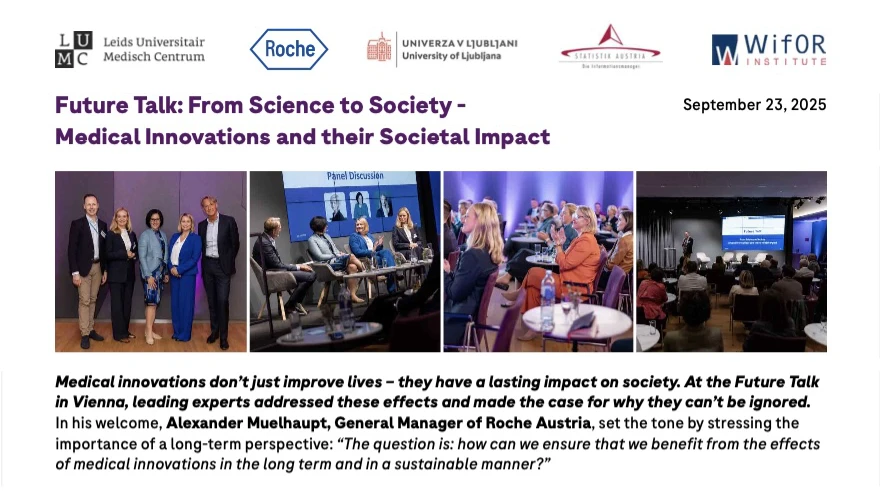
Foto Credit: Cherie Hansson